Timeless Charm: Mastering Retro Line Emblem Elements
The Anatomy of Vintage Style
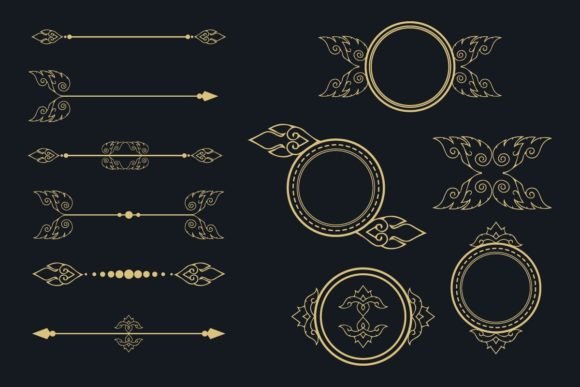
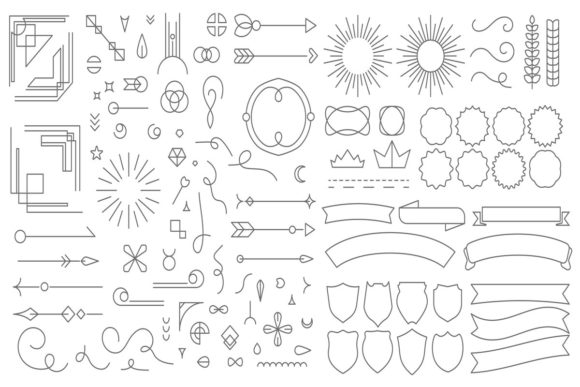
In a digital landscape saturated with sleek minimalism and flat design, there is a growing hunger for texture, history, and personality. This is where Retro Line Emblem Elements steps in, offering a bridge between the past and the present. This collection isn't just a random assortment of shapes; it is a curated set of vintage decorative drawing badges, old-style lined dividers, and intricate frame borders that capture the essence of classical printmaking and signage. When you download this set, you are getting a vector toolkit designed to infuse your projects with an authentic, hand-crafted aesthetic that modern geometry often lacks.
Visually, these elements are defined by their precision and structure. Unlike freehand sketches that might look messy when scaled, these are clean, isolated symbols created as a vector set. The personality of Retro Line Emblem Elements is one of authority and heritage. We are talking about the kind of geometric deco borders you might find on a vintage currency note, an old bank check, or a distinguished letterhead from the early 20th century. The line work is deliberate—varying weights create depth, and the symmetry conveys a sense of stability. Whether it is a circular badge waiting for a monogram or a corner flourish to frame a photograph, the style speaks of craftsmanship.
Real-World Applications: From Branding to Publishing
Understanding the visual language of these elements is only half the battle; knowing where to deploy them is where the strategy comes in. For brand identity designers, Retro Line Emblem Elements are a goldmine. They are particularly effective for brands that want to communicate trust, longevity, or artisanal quality. Think of a craft brewery logo design, a barbershop menu, or the packaging design for a heritage food product. Using these vintage insignias as the foundation for a logo instantly tells the customer, "We know our craft, and we have been doing it well for a long time."
Beyond static logos, these assets shine in editorial design and publishing. If you are a blogger or a magazine layout artist, you know the struggle of breaking up long walls of text. Old-style lined dividers are not just decorative; they are functional tools for visual hierarchy. By inserting a geometric deco border between sections, you give the reader’s eye a natural resting point. This improves readability and flow. Furthermore, publishers can use these vintage frame borders to highlight pull quotes or author bios, adding a layer of sophistication to the page without overwhelming the core content.
For digital marketing and social media, the appeal is immediate. In a feed of standard rectangles and sans-serif text, a distinctively shaped emblem catches the scroll. Marketers and content creators can use these isolated symbols to create consistent visual anchors for series—such as a "Tip of the Week" badge or a "Sale" tag that looks hand-stamped rather than auto-generated. Because the file includes an EPS10 vector format, you have the flexibility to scale these elements for a massive billboard or shrink them down for a favicon without losing a pixel of quality.
Practical Implementation and Design Strategy
Integrating Retro Line Emblem Elements into your workflow requires a thoughtful approach to ensure they enhance rather than clutter your design. The first step is font pairing. Because these emblems are detailed and often "busy" in their line work, they pair best with typefaces that offer high contrast. A clean sans serif font can look striking against a complex vintage border, creating a modern-retro hybrid. Alternatively, pairing them with a formal serif font reinforces the traditional, authoritative vibe. Be cautious with script fonts or highly ornate handwritten fonts—if both the text and the emblem are fighting for attention, the design becomes illegible.
When it comes to readability and hierarchy, use these elements to frame your most important information. A common mistake is placing a heavy geometric border around a dense paragraph of body text. Instead, use the emblems to isolate key phrases, logos, or calls to action. The white space (or negative space) within and around the vector set is just as important as the lines themselves. Allow the design room to breathe so the vintage details can be appreciated.
From a technical standpoint, the product file includes a JPEG at 72ppi for quick mockups and an EPS10 file for production. For any serious commercial application—whether it is print design or high-resolution web work—you should be working with the vector file. This requires a vector editor like Adobe Illustrator. Working in a vector environment allows you to customize the assets to fit your specific needs. You can change the stroke weight to match the typography you are using, adjust the color to match your brand palette, or deconstruct the emblems to use individual components separately.
Evaluating Fit and Licensing
Before committing to a premium font or asset set, it is always wise to evaluate the project fit. Ask yourself: does the personality of the asset match the message of the project? Retro Line Emblem Elements suggest history and permanence. If you are designing for a cutting-edge tech startup focused on the future, these might feel anachronistic. However, if you are a small business owner, a crafter, or a designer working on packaging design, these assets are invaluable.
It is also crucial to understand the licensing. Since these are commercial font assets, you are paying for the right to use them in client work, merchandise, and digital products. Always double-check the specific license agreement regarding resale of the raw files versus using them in a derivative design. Generally, as long as the elements are part of a larger composition—like a logo or a poster—you are safe.
Finally, do not be afraid to experiment. The beauty of a vector set is its malleability. You can stack the lined dividers to create complex patterns, use the badges as masks for textures, or combine multiple corner frames to build entirely new compositions. Whether you are revamping a web design layout, creating social media graphics, or designing a wedding invitation, these elements provide the building blocks for work that feels timeless, professional, and deeply human. By leveraging the distinct style of these vintage decorative drawing badges, you elevate your work from generic to memorable.